
Is Koh Phangan Expensive? Honest 2026 Cost Guide
- The Joy Beach Villas

- Apr 13
- 10 min read
Planning a trip to Koh Phangan and wondering what it will actually cost you? This guide cuts through outdated blog posts and gives you real 2026 pricing for accommodation, food, transport, and activities. Whether you’re a budget traveller, a digital nomad, or looking at villas for a family break, you’ll find concrete numbers to plan your trip properly.
Quick Answer: Is Koh Phangan Expensive in 2026?
No, Koh Phangan is not expensive by western standards. The island costs approximately 41% less than the average cost of living in the United States and ranks in the top 27% of least expensive cities globally. For UK and European visitors, it remains genuinely affordable compared to domestic holidays or other popular destinations.
That said, prices have risen noticeably since 2018–2020. Rent, cafes, and wellness activities have all increased. The island now sits in a middle ground: cheaper than Koh Samui and Phuket, but pricier than northern Thailand (Chiang Mai) or rural parts of southeast Asia.
Here are realistic daily budgets for 2026:
Budget backpacker: 1,000–1,500 THB (£22–£33 / $28–$42) per day
Mid range: 2,000–3,500 THB (£44–£77 / $55–$100) per day
Luxury traveller: 4,500+ THB (£100+ / $130+) per day
These daily figures typically cover accommodation, two to three meals, local transportation (scooter or occasional taxi), and a simple activity or drinks. Budget travelers sacrifice air conditioning and nightlife for lower costs. Mid range visitors get private rooms, a mix of local restaurants and cafes, plus occasional paid activities. Luxury travellers enjoy pool villas, restaurant meals, and frequent tours or spa treatments.
How Much Does a Trip to Koh Phangan Cost? (1 Week, 2 Weeks, 1 Month)
Travel costs scale with trip length and style, but longer stays typically reduce your per-day average. You settle into cheaper routines, find better accommodation deals, and stop paying tourist premiums at every turn.
Solo traveller estimates for 2026:
1 Week:
Budget: 7,000–10,500 THB (£155–£230 / $205–$310)
Mid range: 14,000–20,000 THB (£310–£440 / $410–$590)
Luxury: 25,000–35,000+ THB (£550–£770+ / $735–$1,030+)
2 Weeks:
Roughly double the weekly costs with modest discounts for longer accommodation bookings
Monthly rentals often offer 10–15% savings compared to nightly rates
1 Month:
Budget: 30,000–40,000 THB (£660–£880 / $880–$1,176)
Mid range: 45,000–70,000 THB (£990–£1,540 / $1,320–$2,060)
Luxury: 80,000–120,000+ THB (£1,760–£2,640+ / $2,350+)
For couples: Sharing accommodation dramatically cuts per-person costs. One couple reported a monthly budget of 35,200 THB total ($1,065 USD) for mid range living, including a modern one-bedroom house in Sri Thanu, eating out daily, scooter rental, and occasional activities. That breaks down to roughly £530 per person per month.
Seasonal pricing matters: Prices spike around the full moon party, Christmas through New Year, and July–August. Accommodation can jump 50–100% during peak dates. If you’re price-sensitive, avoiding these windows saves serious money.
Accommodation Costs: Hostels, Hotels and Villas
Accommodation is usually the biggest expense on Koh Phangan, and prices vary depending on beach location and season. Popular areas like Haad Rin beach (the full moon epicentre) command premium rates. Quieter spots like Sri Thanu, Baan Tai, and the west coast offer better value for longer stays.
Budget options (hostels, fan bungalows, guesthouses):
Dorm beds: 250–450 THB per night outside peak dates
Basic private bungalow or guesthouse: 500–800 THB per night
Peak season (moon party, December): 800–1,500+ THB per night
Many hotels and guesthouses increase rates dramatically around major events. Booking through Airbnb typically runs 40–60% higher than local rates, so consider booking short initial stays online, then scouting for “For Rent” signs while on the island.
Mid range hotels and nicer bungalows:
Air conditioning, pool access, close to beautiful beaches: 1,200–2,500 THB per night
Popular areas: Baan Tai, Hin Kong, Sri Thanu
A comfortable one-bedroom house with kitchen and reliable WiFi runs 15,000–25,000 THB per month
Villas and high-end stays:
Private pool villas: 3,000–6,000 THB per night
Ultra-luxury options: significantly higher
Monthly rates for stylish pool villas: 35,000–70,000+ THB depending on view and season
Here’s the key insight for couples and families: a two-bedroom villa with kitchen and infinity pool can actually be cheaper per person than booking two separate hotel rooms.
For a few people travelling together, splitting a 5,000 THB per night villa between four adults works out to 1,250 THB each—less than many mid range hotel rooms and with far more space.
Monthly rental pricing for 2026:
Simple bungalow: 8,000–15,000 THB
Comfortable 1–2 bedroom house: 18,000–30,000 THB
Pool villa with views: 35,000–70,000+ THB
Long-term renters should budget separately for electricity, especially with air conditioning use. Moderate AC usage typically adds 1,500–3,000 THB monthly to your bills.
Food and Drink Prices: Street Food vs Restaurants
Food is where you have the most control over daily spending. Eating mostly Thai food at local food spots keeps costs remarkably low. Switching to imported coffee, Western brunches, and fancy restaurants quickly escalates your bill.
Budget eating (street food stalls and local restaurants):
Pad thai, green curry, fried rice: 50–90 THB per dish
Thong Sala and Pantip night market: best food at best prices
Fresh juices and fruit shakes: 30–50 THB
Sushi pieces: 10–20 THB each
Curries and noodle soups: 50–70 THB
Large water bottle from 7-Eleven: 15–20 THB (never drink tap water)
Mid range cafes and restaurants:
Hip brunch spots and beachfront cafes: 180–350 THB for Western meals
Coffee and specialty drinks: 80–150 THB
Health food and vegan bowls in Sri Thanu: 180–280 THB
Smoothies: 90–150 THB
Drinks and alcohol:
Beer in shops: 40–60 THB
Beer in bars: 80–150 THB
Cocktails and buckets at parties: 150–350+ THB
Alcohol spending at parties can easily reach 500–1,000+ THB in one night
Daily food spending examples:
Budget: 200–350 THB (markets, local stalls, grocery shopping at 7-Eleven)
Mid range: 400–800 THB (mix of Thai eateries and 1–2 cafe meals)
Higher end: 1,000+ THB (beachfront restaurants, international cuisine, frequent cafes)

Thong Sala night market offers some of the best deals on the island—arrive hungry and explore.
Transport Costs: Scooters, Taxis and Ferries
Public transportation on Koh Phangan is extremely limited. Local buses don’t really exist in any practical sense. Scooters are the main transport method for independent travellers, while taxis and songthaews (shared minibuses) work but cost more, especially for solo users.
Scooter rental:
Daily rental: 250–300 THB for a basic Honda Click
Monthly rental: 3,000–4,500 THB depending on model
Petrol: approximately 120–150 THB to fill the tank, lasting several days with light use
Taxi and songthaew transportation costs:
Shared songthaew from Thong Sala pier to Sri Thanu or Hin Kong: 150–200 THB per person
Longer routes or night trips to Haad Rin: 200–400 THB per person
Full moon nights: higher prices and longer waits
Ferry costs to reach the island:
From Surat Thani or Donsak (mainland): 400–700 THB one-way
From Koh Samui: 300–500 THB one-way, depending on operator
Practical scooter rental tips:
Check condition thoroughly before accepting
Photograph any existing damage
Expect a passport deposit or cash as insurance
Wear a helmet (accidents are common)
Budget for occasional taxis if you don’t want to drive at night or in rain
Typical daily transport spend:
Regular scooter users: 150–250 THB per day on average
Non-scooter users relying on taxis: 300–600+ THB per day, especially if based far from main town Thong Sala
Activities, Parties and Yoga: What Do You Pay for Fun?
Beaches and viewpoints are free and abundant across the Thai islands. You can spend entire days at white sand beaches, hiking to waterfalls, or watching sunsets without spending a single Thai baht. But paid activities, yoga classes, and parties can quickly raise your monthly budget.
Common activity prices in 2026:
Yoga drop-in classes: 250–400 THB per session
Multi-class yoga passes: slightly cheaper per class
Thai massage: 300–400 THB for one hour
Snorkelling day tours: 800–1,500 THB depending on boat and inclusions
Scuba diving fun dives: 2,000–3,500 THB per dive package
Cooking class: varies based on location and duration
Party costs:
Full Moon Party entry: approximately 200–300 THB (average prices fluctuate)
Half Moon Party, Jungle Party, Waterfall Party, Eden Garden: 400–1,000 THB plus drinks
Alcohol at parties: easily 500–1,000+ THB if not careful
Free and low-cost alternatives:
Hiking to Phaeng Falls and exploring national parks
Swimming at Bottle Beach
Sunset at Zen Beach
Community events and donation-based meditations
Exploring beautiful temples across the island
Making friends with other travellers at beaches
Note: avoid elephant riding activities—they’re increasingly recognised as harmful to the animals.
Daily activity spending:
Low-key days: 0–200 THB (beach time, self-guided walks, natural beauty)
Active days: 500–1,500 THB (tour, yoga plus cafe, or a party)

Yoga and wellness activities are part of island life—drop-in classes run throughout the week at various studios.
Realistic Daily Budgets: Budget, Mid Range and Luxury Travellers
Your actual daily spend depends on how often you party, whether you use air conditioning constantly, and how much you eat at Western cafes versus local Thai spots. Here’s what each level genuinely looks like in 2026.
Budget backpacker day (1,000–1,500 THB / £22–£33):
Accommodation: dorm bed or cheap bungalow (250–500 THB)
Food: mostly street food, markets, 7-Eleven snacks (200–300 THB)
Transport: shared scooter or minimal taxi (150–200 THB)
Activities: free beaches and hikes (0–100 THB)
Nightlife: occasional beer from shops (0–100 THB)
Comforts sacrificed: fan instead of air conditioning, shared bathrooms, limited private space, minimal party destinations. This level suits backpackers focused on extending their trip and meeting other travellers.
Mid range comfort day (2,000–3,500 THB / £44–£77):
Accommodation: private AC room or simple villa (1,200–1,800 THB)
Food: mix of Thai and Western meals (400–800 THB)
Transport: daily scooter rental (150–300 THB)
Activities: one paid activity or yoga (300–500 THB)
Drinks and nightlife: occasional cocktails (100–300 THB)
This tier is realistic for many couples and digital nomads staying a few weeks. Most visitors find this level genuinely comfortable without feeling restrictive.
Luxury villa day (4,500–7,000+ THB / £100–£155+):
Accommodation: high-end resort or pool villa (2,500–4,000 THB)
Food: restaurant meals and frequent cafes (800–1,500 THB)
Transport: taxis instead of scooters (300–500 THB)
Activities: spa treatments and tours (800–1,500 THB)
Drinks and nightlife: multiple cocktails, premium venues (500–1,000 THB)
Even at this level, you’re spending far less than equivalent Greek islands or Caribbean resorts for similar quality experiences.
Villa sharing economics:
For couples, families, or small groups, villas become exceptional value. A two-bedroom pool villa at 5,000 THB per night split between four adults is 1,250 THB each—substantially less than many hotels per person. Add the kitchen for grocery shopping and home cooking, and savings multiply quickly. This makes villas a genuine budget option rather than luxury-only, particularly for anyone staying more than a few nights.
If you’re considering a villa stay, the west coast is where you’ll find some of the best value options. Places like Joy Beach Villas give you a good sense of what that experience feels like: direct beach access, more space than a standard hotel room, and a quieter, more private atmosphere. For couples or families, splitting a villa like this can often work out better value than booking multiple hotel rooms, especially for stays of a few nights or more.
Which profile fits you?
Backpackers and party-focused short stays: budget tier
Digital nomads and remote workers (2–6 weeks): mid range tier
UK professionals on 1–2 week breaks: mid range to luxury
Families and groups: villa-sharing mid range to luxury
Long-Term Living Costs on Koh Phangan
This section is for digital nomads, remote workers, and semi-retirees considering 1–6 month stays or longer. The cost of living on the island remains attractive compared to western countries, though it requires some planning.
Monthly budget tiers for 2026:
Tight budget (25,000–35,000 THB / £550–£770 per person):
Simple bungalow or basic house
Cooking at home often
Scooter rental
Minimal parties and paid activities
Requires discipline but very achievable
Comfortable living (40,000–60,000 THB / £880–£1,320 per person):
Nicer house or modern villa share
Eating out regularly
Some yoga, massage, and parties
This is the realistic tier for most visitors from the UK
Higher-end living (70,000–100,000+ THB / £1,540–£2,200+ per person):
Pool villa
AC running frequently
Western groceries and frequent dining
Regular activities and social events
Typical monthly line items:
Rent: 12,000–30,000 THB (bungalow versus modern house)
Utilities and WiFi: 1,500–3,000 THB depending on air conditioning usage
Food: 10,000–20,000 THB per person (mix of home cooking and eating out)
Scooter and fuel: 3,500–5,000 THB
Activities, yoga, massages, co-working: 3,000–10,000 THB (highly variable)
Phone and miscellaneous: 500–1,500 THB
Travel insurance: varies depending on coverage level
Some costs like gyms, yoga passes, and co-working spaces can look higher than in Chiang Mai or other parts of Thailand. But overall, island living still comes in far below London, Manchester, or other major UK cities for equivalent quality of life. Check Facebook groups for local recommendations on finding a decent place.
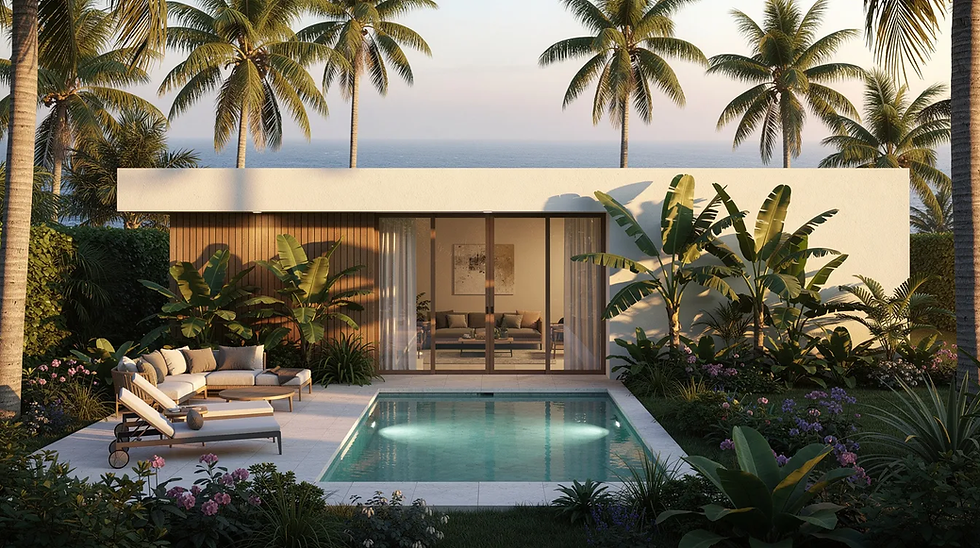
Villas with pools become surprisingly affordable for couples or small families staying a month or longer.
How to Keep Your Koh Phangan Trip Affordable
With some planning, most visitors from the UK, Europe, or North America find the island offers strong value. Here’s how to save money without sacrificing experience:
Timing and booking:
Avoid peak dates (full moon, Christmas through New Year, February and August) if you don’t care about big parties
Book accommodation 4–6 weeks ahead during high season, especially for hotel deals on villas or family stays
Check for best hotel rates during low season for more tips on availability
Best prices come from direct booking after initial research online
Food strategies:
Eat Thai food most of the time—the local food is excellent and cheap
Use markets like Makro for grocery shopping if you have kitchen access
Visit Pantip night market for some of the best deals on the island
Limit cafe visits to a few times per week rather than daily
Transport savings:
Rent a scooter for any stay over 3–4 days (scooter rental pays for itself quickly)
Check typical prices at multiple rental shops before committing
Only confident drivers should rent—medical costs from accidents can destroy a budget
Be aware of petty theft on beaches; don’t leave valuables unattended
Activity budgeting:
Choose free activities several days per week (beaches, hikes, waterfalls, viewpoints)
Limit expensive day tours to genuine highlights
Set a realistic weekly party budget so alcohol and entrance fees don’t surprise you
Skip overpriced tourist trap activities
Accommodation strategies:
Consider villas for groups—often cheaper per person than double bed hotel rooms
Look in local neighborhoods (Thong Sala, Baan Tai) rather than touristy hubs
Negotiate monthly rates if staying 30+ days
Walk around and check “For Rent” signs after arriving
Honest Assessment
Koh Phangan isn’t dirt cheap anymore, but it still offers strong value at every level. Whether you’re travelling on a budget or booking a beachfront villa, what you get for your money is hard to match compared to most European destinations.
The key is simply matching your expectations to your budget. Once you do, it becomes an easy place to enjoy—whether that’s street food by the beach, sunset drinks, or waking up right by the sea.


Comments